Street Legal Golf Carts are moving beyond golf courses into residential communities, resorts, campuses, and planned urban districts. Their appeal is practical: compact dimensions, low operating noise, and simple charging for short-distance travel. Yet “street legal” does not mean universally road-ready. Equipment, speed limits, lighting, registration, insurance, and approved operating zones vary by country and municipality. Global buyers should verify local requirements before comparing suppliers.
Market data supports this growing interest. Mordor Intelligence estimates that the global golf cart market will expand steadily through the second half of this decade, supported by tourism, real estate development, and electric mobility demand. Allied Market Research also identifies electric models as a major growth segment, reflecting wider pressure to reduce fuel use and urban emissions. These reports use different market definitions, so their forecasts should not be treated as exact promises. That difference matters.
China is now a major manufacturing base for electric utility vehicles, supported by mature battery, motor, controller, and vehicle-component supply chains. Experienced exporters can offer lithium battery systems, corrosion-resistant frames, LED lighting, seat belts, mirrors, and customizable interiors. Buyers should still request test reports, battery certifications, warranty terms, spare-parts plans, and production photographs. A polished showroom is not enough.
Small details reveal quality. Check weld consistency, connector sealing, brake response, and charger temperature after repeated use. Ask whether the advertised range was measured with passengers, slopes, and air conditioning. This guide examines leading Chinese Street Legal Golf Carts for global buyers, while acknowledging an uncomfortable truth: the cheapest quotation may become the most expensive decision.
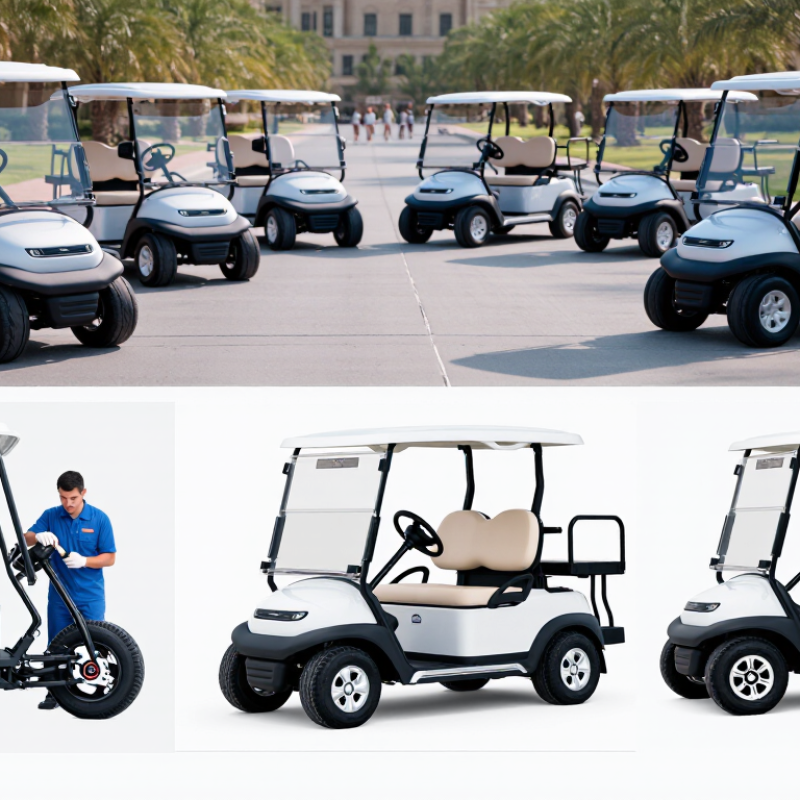
China’s street-legal golf carts require more than a motor, battery, and headlights. Requirements depend on the city, road type, speed class, and vehicle category. Buyers should verify national standards, local registration rules, insurance, and approved operating zones before shipment.
In China, compliance may involve braking performance, steering control, lighting, mirrors, seat belts, warning devices, battery safety, and a traceable vehicle identification number. A cart used inside a resort may not qualify for public roads. That difference is easy to miss. China’s GB/T 18384 series covers safety requirements for electric vehicles, but it does not automatically make every golf cart road legal.
Global markets use different frameworks. In the United States, NHTSA defines low-speed vehicles as four-wheeled vehicles reaching 20 to 25 mph, with equipment requirements under FMVSS No. 500. European buyers may need L-category type approval, electromagnetic compatibility testing, and country-specific registration. UNECE regulations also influence lighting, braking, and vehicle construction expectations. The International Energy Agency reported nearly 14 million electric car sales worldwide in 2023, showing stronger demand for electric transport, but golf carts remain a separate compliance problem.
Technical files should include test reports, battery documentation, charging details, load ratings, and user manuals. Exporters should confirm whether right-hand or left-hand traffic affects lamp placement and controls. This sounds practical. It is not always simple. A translated certificate can still fail local review. Local authorities, not marketing claims, decide road access.
China-made street legal golf carts now combine practical mobility with increasingly refined electric systems. Grand View Research valued the global golf cart market at about USD 1.77 billion in 2023 and projects a 6.5% CAGR from 2024 to 2030. This growth reflects demand from resorts, campuses, residential communities, and controlled urban routes.
Battery selection matters. Many export models use 48V or 72V lithium-ion packs, which reduce maintenance and provide steadier acceleration than traditional lead-acid systems. Buyers should check usable battery capacity, not only voltage. LED lamps, turn signals, mirrors, windshields, seat belts, hydraulic brakes, and regenerative braking improve daily usability. Useful details include corrosion-resistant frames, sealed connectors, onboard chargers, and easy access to replacement parts.
Legal status is local. In the United States, low-speed vehicles must meet Federal Motor Vehicle Safety Standard 500, while European markets apply different vehicle categories and approval rules. The International Energy Agency reported that global electric car sales exceeded 17 million in 2024, but that figure does not represent golf carts directly. It still shows stronger acceptance of electric transport. Range claims deserve caution. Hills, passengers, cold weather, and frequent stops can cut real performance. That part is often underexplained. A careful buyer should request test conditions, battery warranty terms, charging specifications, and documented conformity before placing a large order.
Neighborhood street legal golf carts suit short trips, gated communities, and local streets. Compact two-seat models are easy to park and turn around. They usually include headlights, brake lights, mirrors, seat belts, and a windshield. Comfortable enough for daily errands.
Four-seat and six-seat carts support families, hotels, resorts, and small community shuttles. Their longer frames provide more seating but require wider turning space. Buyers should check legroom, step height, suspension movement, and braking feel. A crowded rear bench can become uncomfortable on uneven roads. That detail is often missed.
Utility carts serve farms, campuses, maintenance teams, and warehouses near public roads. Their rear platforms can carry tools, bins, or light materials. Enclosed cargo versions offer better protection during rain and dusty work. However, extra weight changes stopping distance and battery range. Test the cart with its expected load, not an empty body.
Power systems also shape the buying decision. Electric models operate quietly and need planned charging access. Lithium batteries may reduce weight, while other battery designs can lower the initial cost. Range depends on hills, temperature, passengers, and tire pressure. Published figures can look optimistic.
Street-legal requirements differ between countries, states, and cities. Confirm required lighting, mirrors, speed limits, vehicle identification records, insurance, and registration before shipment. A cart approved for one market may need changes elsewhere. That uncertainty deserves careful review.
For global buyers, evaluating a Chinese golf cart supplier requires more than comparing export prices. Request the factory’s registration, production capacity, quality procedures, and recent shipment references. An independent factory audit can reveal weak welding, poor cable routing, or unfinished battery compartments. Ask for test records covering braking, lighting, steering, water resistance, and charger safety.
Model selection should begin with local road rules, not appearance. A street-legal configuration may require approved lamps, mirrors, seat belts, speed limits, identification plates, and specific safety documentation. Requirements differ between countries and even between regions. Request battery chemistry, usable capacity, cycle-life results, and charging time. BloombergNEF reported an average lithium-ion battery pack price of 139 US dollars per kWh in 2023, but a cheaper pack may indicate lower cells or weaker protection systems. Price is only a clue.
Check whether the supplier can provide stable spare parts after delivery. Ask for a written warranty, response times, wiring diagrams, and replacement procedures. Inspect one sample personally, including the suspension under load and the brake response on a slope. The International Organization for Standardization publishes quality and safety standards, but compliance claims still need verification. I would not trust a polished certificate scan alone. Some suppliers communicate well before payment, then respond slowly when defects appear. That risk deserves a practical test. Conduct a pilot order before committing to a large fleet.
| Evaluation Category | Dimension | Typical Specification or Market Range | Why It Matters for Global Buyers | Recommended Verification |
|---|---|---|---|---|
| Vehicle Type | Two-seat street-legal cart | 2 seats; approximately 2.4–3.0 m long; commonly equipped with a 48 V electric system. | Suitable for private communities, resorts, campuses, and short local trips where passenger capacity is limited. | Confirm seating configuration, overall dimensions, turning radius, and the legal vehicle category in the destination market. |
| Vehicle Type | Four-seat model | 4 seats; approximately 3.0–3.6 m long; often available with 48 V or 72 V battery systems. | Provides a practical balance between passenger capacity, maneuverability, and transport cost. | Check passenger weight rating, rear-seat design, axle load, braking performance, and registration requirements. |
| Vehicle Type | Six-seat model | 6 seats; approximately 3.6–4.3 m long; usually requires a higher-capacity battery and stronger suspension. | Useful for hotels, tourist facilities, gated communities, and shuttle operations. | Verify gross vehicle weight, hill-climbing ability under full load, brake capacity, and road-speed approval. |
| Electric System | Rated motor power | Approximately 3–7.5 kW for common low-speed electric carts; higher outputs may be used for larger or hilly-terrain models. | Motor power affects acceleration, gradeability, payload performance, and energy consumption. | Request continuous power, peak power, motor type, controller rating, and performance data under specified payload conditions. |
| Electric System | Battery chemistry | Lead-acid batteries remain available; lithium iron phosphate (LiFePO4) batteries are increasingly used for lower weight and longer cycle life. | Battery chemistry influences purchase price, charging time, service life, safety, and total ownership cost. | Verify cell manufacturer, usable capacity, battery-management-system functions, warranty terms, and transport documentation. |
| Electric System | Battery capacity | Common configurations range from approximately 5–20 kWh, depending on voltage, capacity, seating, and driving range. | Higher usable capacity generally supports longer operating range but increases vehicle weight and charging cost. | Compare usable kWh rather than only nominal Ah; request a range test method, payload, speed, terrain, and ambient temperature. |
| Performance | Maximum speed | Typical low-speed configurations are approximately 25–40 km/h; some road-approved versions are designed for higher regulated speeds. | Maximum speed must match the legal classification and road conditions of the destination country or region. | Confirm speed limiter settings, instrument accuracy, braking distance, and whether the stated speed is tested under load. |
| Performance | Driving range | Approximately 60–150 km per charge is commonly advertised, depending on battery size, speed, payload, temperature, and terrain. | Advertised range can vary significantly from real-world use, especially in cold weather, on slopes, or with a full passenger load. | Require a written range test based on a defined test cycle and compare expected range at the buyer’s actual operating conditions. |
| Performance | Gradeability | Many utility-oriented electric carts claim approximately 15–25% maximum gradeability, subject to payload and surface conditions. | Gradeability is critical for hilly resorts, residential developments, parking structures, and uneven roads. | Ask for a loaded hill-climb test, traction specification, tire type, controller settings, and continuous climbing limitations. |
| Safety | Braking and parking system | Hydraulic or mechanical service brakes may be used; an independent parking brake and regenerative braking may also be available. | Effective braking is essential when the cart is fully loaded or operating on slopes. | Check brake type, stopping-distance test results, parking-brake performance, brake-light operation, and maintenance intervals. |
| Safety | Occupant protection | Potential equipment includes seat belts, high-back seats, handholds, mirrors, windshield, roof, side curtains, and rollover-protection structures. | Safety equipment affects passenger protection, insurance acceptance, and local road-registration eligibility. | Request component specifications, test reports, seat-belt anchorage information, and photographs of the production configuration. |
| Road Legality | Lighting and signaling | Road-use configurations commonly require headlights, tail lamps, brake lamps, turn signals, reflectors, a horn, mirrors, and a windshield. | Missing or non-compliant lighting can prevent registration even when the vehicle drives correctly. | Use the destination authority’s checklist and verify lamp markings, wiring protection, visibility, and installation on the exact model. |
| Road Legality | Homologation and certification | Requirements vary by jurisdiction and may involve type approval, vehicle identification, electromagnetic compatibility, lighting, braking, or low-speed-vehicle rules. | A general factory certificate does not automatically prove road legality in another country. | Identify the exact legal vehicle class first, then confirm whether local testing, inspection, registration, or import approval is required. |
| Charging | Charger input and charging time | On-board or external chargers may support local AC systems; charging commonly takes approximately 4–10 hours depending on battery capacity and charger output. | Charging compatibility affects daily utilization, electrical installation cost, and fleet turnaround time. | Confirm input voltage, frequency, plug type, charging current, protection features, efficiency, and charging time from a low state of charge. |
| Supplier Evaluation | Production capability | A qualified supplier should provide a stable production process, inspection records, component traceability, and documented quality controls. | Production consistency is more important than a low sample price when purchasing multiple units. | Request a factory audit, production-line video call, quality-control plan, pre-shipment inspection procedure, and serial-number records. |
| Supplier Evaluation | Customization control | Common options include seating layout, battery type, charger, tires, colors, weather equipment, cargo accessories, and dashboard configuration. | Customization can improve local suitability but may increase lead time, spare-parts complexity, and certification risk. | Use a signed configuration sheet with drawings, part numbers, tolerances, acceptance criteria, and approval samples. |
| Supplier Evaluation | Spare parts availability | Important service parts include brake components, tires, suspension parts, controllers, chargers, contactors, lamps, switches, and battery components. | Fast access to parts reduces downtime and protects the resale value of the fleet. | Obtain a recommended two-year spare-parts list, pricing, lead times, technical manuals, wiring diagrams, and service procedures. |
| Supplier Evaluation | Warranty and after-sales support | Warranty periods commonly differ by component; batteries, chargers, electronics, chassis, and wear parts may have separate terms. | A clear warranty structure helps buyers calculate risk and avoid disputes over consumable components. | Check warranty duration, coverage exclusions, response time, remote diagnostics, replacement procedures, and labor responsibility. |
| Commercial Review | Total landed cost | Total cost includes vehicle price, options, packaging, inland transport, ocean or air freight, insurance, duties, taxes, inspection, registration, and service parts. | The lowest quoted unit price may not produce the lowest operating cost after import and compliance expenses. | Request a complete pro forma invoice and calculate landed cost per unit using the correct Incoterm and destination charges. |
| Commercial Review | Incoterms and shipment planning | Common trade terms include EXW, FOB, CIF, and DAP; lithium-battery shipments require appropriate dangerous-goods documentation where applicable. | Clear responsibility for freight, insurance, customs clearance, and battery transport documentation prevents delays. | Confirm Incoterm, port, packaging specification, container loading plan, HS classification, battery test documents, and delivery schedule. |
| Sustainability | Battery end-of-life management | Lead-acid and lithium batteries require controlled collection, recycling, and transport procedures according to local regulations. | End-of-life obligations can affect environmental compliance and the fleet’s long-term operating cost. | Ask for battery chemistry declarations, recycling guidance, safety data, and the supplier’s recommended disposal process. |
Note: Specifications are indicative market ranges for generic Chinese electric golf-cart configurations, not guaranteed specifications for any particular supplier. Street-legal status, equipment, speed limits, certification, registration, and insurance requirements must be confirmed with the relevant authority in the destination country or region.
Importing a street-legal golf cart from China requires more than comparing factory prices. Legal status depends on the destination country, state, or municipality. A cart approved for one road system may need changes elsewhere. Rules vary.
Before ordering, confirm required equipment with a local transport authority. Typical checks include headlights, turn signals, mirrors, windscreen, seat belts, reflectors, tires, brakes, and a vehicle identification number. Ask the supplier for test reports, wiring diagrams, battery specifications, and a commercial invoice. Keep records.
Battery type affects shipping documents, packaging, insurance, and port handling. Lithium batteries may require special declarations and certified transport procedures. Lead-acid batteries also need secure packing and leakage protection. A freight forwarder familiar with vehicle imports can prevent costly delays, but their advice still needs verification.
Customs usually requires accurate product descriptions, tariff classification, origin details, and ownership documents. Some buyers focus on the purchase price and overlook inland delivery, unloading equipment, storage, inspection fees, and local registration. Delivery takes planning. Confirm whether the cart arrives crated, partially assembled, or ready for inspection. Measure the crate and loading access before booking transport.
Quality control should happen before shipment. Request photos of the serial number, brake operation, lights, tire markings, and battery compartment. A remote inspection helps, but it cannot replace an independent examination. That limitation deserves honesty. Minor documentation errors can become expensive after arrival. Clearance and registration should be treated as separate steps, not one process.
Nominal single-phase household voltages vary by destination market. Buyers should confirm charger compatibility, plug configuration, electrical certification, and local vehicle-registration requirements before importing. China commonly uses 220 V at 50 Hz; North America commonly uses 120 V at 60 Hz; Europe, the United Kingdom, and Australia commonly use 230 V at 50 Hz.
A compact two-seat cart suits short trips and narrow local streets. It is easier to park and turn around. Look for headlights, brake lights, mirrors, seat belts, and a windshield.
These carts suit families, resorts, hotels, and community shuttle duties. Their longer frames need wider turning space. Check legroom, step height, suspension movement, and braking feel before purchase.
Utility carts carry tools, bins, and light materials on rear platforms. Enclosed cargo areas help during rain and dusty work. Test the cart with its expected load. An empty-body test can mislead you.
Electric carts operate quietly but need dependable charging access. Battery weight affects handling and energy use. Range changes with hills, temperature, passengers, and tire pressure. Published range can look optimistic.
Request factory registration, production capacity, quality procedures, and shipment references. An independent audit may reveal weak welding or poor cable routing. Ask for braking, lighting, steering, water-resistance, and charger-safety records.
Request battery chemistry, usable capacity, charging time, and cycle-life results. Ask how the battery is protected during charging and transport. A low price may hide weaker cells. Price is only a clue.
Requirements vary by country, state, and municipality. Confirm lights, turn signals, mirrors, windscreen, seat belts, reflectors, tires, and brakes. You may also need identification records, insurance, registration, and safety documents. Check locally.
Confirm the product description, tariff classification, origin details, and ownership documents. Budget for unloading, storage, inspection, inland transport, and local registration. Measure the crate and loading access first. Request serial-number and battery-compartment photos before shipment. Remote inspection helps, but it cannot replace independent examination.
China-made Street Legal Golf Carts are increasingly attractive to global buyers seeking practical, efficient, and customizable transportation. To qualify as street legal, a golf cart generally needs essential safety equipment such as headlights, taillights, turn signals, mirrors, seat belts, reliable brakes, and a compliant speed and power system. Requirements vary by country and region, so buyers should confirm local standards before choosing a model. Chinese manufacturers commonly offer electric carts in configurations for neighborhoods, resorts, campuses, industrial sites, tourism areas, and light commercial use, with options for different seating capacities, driving ranges, batteries, and weather protection.
When evaluating suppliers, global buyers should review product specifications, quality-control procedures, certifications, warranty terms, spare-parts support, production experience, and communication efficiency. Import planning should include vehicle classification, documentation, customs procedures, shipping arrangements, delivery timelines, and local registration or inspection requirements. A reliable purchasing decision combines suitable vehicle design, verified compliance, transparent pricing, and dependable after-sales service, helping buyers receive Street Legal Golf Carts that are safe, efficient, and appropriate for their intended market.